
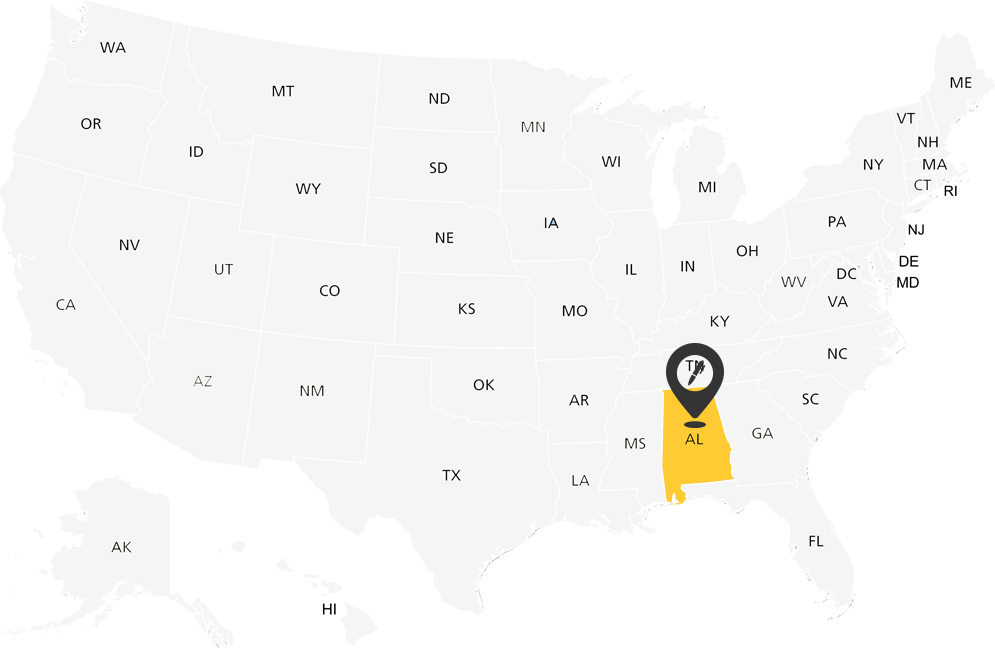
Alabama notary requirements
Responsible office: Alabama Secretary of State and county probate judges.
State authorization and ONC account setup are separate. The guidance below covers the named requirements; use the linked official instructions for your application and the particular notarial act.
Current remote-appearance law
Act 2026-536 took effect October 1, 2026. The notary must be in Alabama and the signer must be within the United States. Remote appearance requires simultaneous sight and sound and a recording retained for seven years. Voting-related documents, including absentee-ballot applications and affidavits, are excluded.
Identity, willingness and recording notice
Use personal knowledge or the statutory combination of two valid government-issued IDs, at least one with a photograph and signature, and a public/private data-source review. Verify the signer’s understanding and voluntary action, and notify all participants that the session must be recorded.
Original documents and refusal
Documents must be provided to the notary for authentication and original signature. The act defines an original signature as wet ink directly on the document. Refuse when the signer lacks capacity or understanding, is under duress or undue influence, or the technology is insecure, including suspected artificial-intelligence-generated signer images.
Before using ONC
Ask support to confirm the required paper delivery, original signatures, recording notice and refusal workflow before arranging an Alabama notary account. A subscription alone does not establish that fit.
Location, documents and acceptance
The Alabama notary must remain in Alabama and the signer must be in the United States. Confirm document eligibility and the recipient’s requirements before arranging the act.
A signer’s residence does not by itself determine a notary’s authority. An eligible out-of-state notary’s service is a separate question from a locally commissioned notary’s authority. Ask the document recipient about acceptance, witnesses, originals and recording requirements before scheduling.