
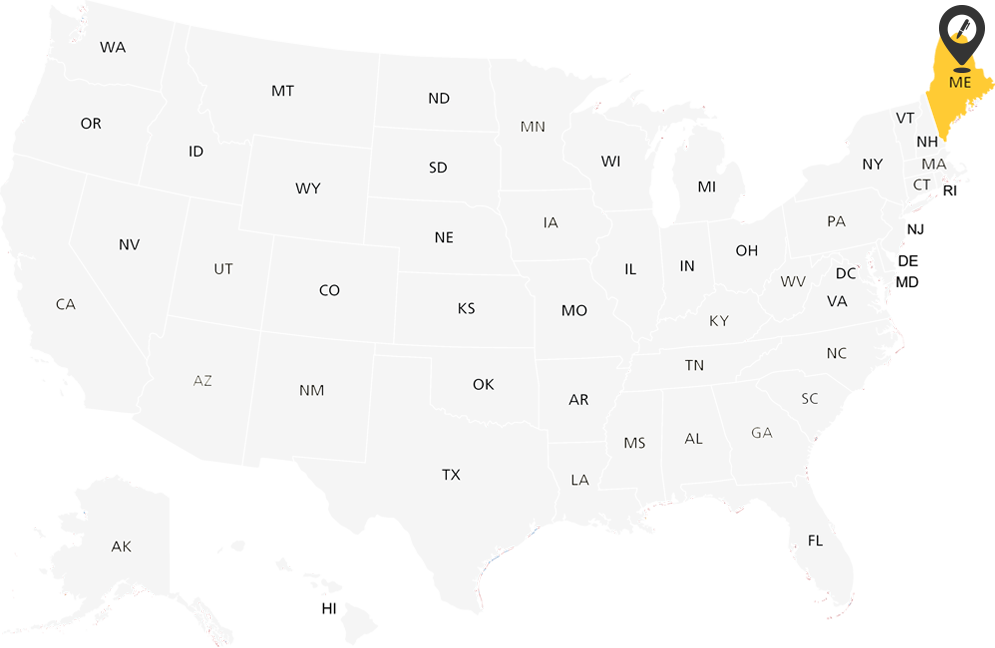
Maine notary requirements
Responsible office: Maine Secretary of State.
State authorization and ONC account setup are separate. The guidance below covers the named requirements; use the linked official instructions for your application and the particular notarial act.
Submit the notice and obtain approval
File the Notice to Perform Electronic and/or Remote Notarizations. Identify approved providers, include each provider’s training/user-approval certification, certify familiarity with the law and rules, and supply the electronic signature and applicable stamp example. Wait for state approval.
Choose the correct notarization method
Electronic in-person notarization requires the signer to be physically present. Remote acts use an approved provider’s simultaneous sight-and-sound technology. Ordinary Zoom or FaceTime is not a substitute.
Maintain journals and recordings
Keep a journal for all electronic and remote acts. The journal must be retained for ten years after its last act. Confirm the separate audiovisual-recording retention, custody and access arrangements before starting. A subscription does not transfer all statutory responsibilities.
Location, documents and acceptance
Maine’s remote and electronic provisions became effective July 1, 2023. Review the applicable location, foreign-signer, document and recipient restrictions; state approval of a provider is separate from approval of the individual officer.
A signer’s residence does not by itself determine a notary’s authority. An eligible out-of-state notary’s service is a separate question from a locally commissioned notary’s authority. Ask the document recipient about acceptance, witnesses, originals and recording requirements before scheduling.