
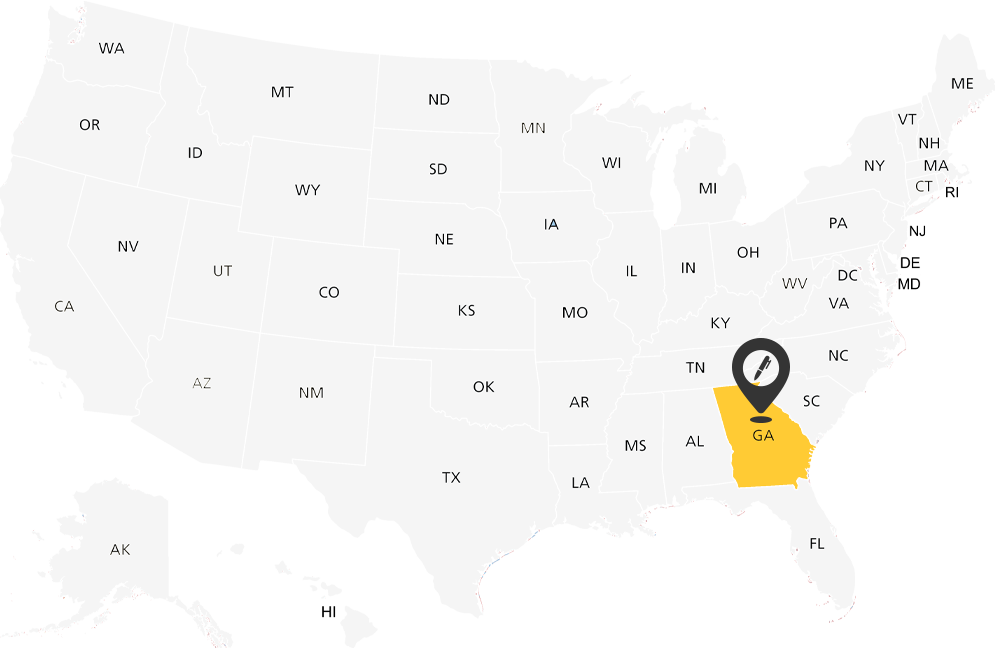
Georgia notary requirements
Responsible office: County clerks of superior court and the Georgia Superior Court Clerks’ Cooperative Authority.
State authorization and ONC account setup are separate. The guidance below covers the named requirements; use the linked official instructions for your application and the particular notarial act.
Follow Georgia commissioning instructions
Apply through the appropriate county clerk of superior court and complete the required notary training. GSCCCA’s current guidance describes a four-year commission and requires the notarial certification to be signed in ink.
Do not infer remote authority from an account
The current commissioning guidance does not provide an ONC remote-notary registration route. A proposed RON bill or an account purchase does not establish effective rules, an operational application or ONC eligibility. Confirm current authority with the appointing office before offering remote acts as a Georgia notary.
For a signer in Georgia
Ask support to review possible service through an eligible out-of-state notary. The notary’s law, document type, signer location and recipient requirements govern whether that service is appropriate.
Location, documents and acceptance
This page does not offer Georgia-notary RON onboarding. Service for a signer located in Georgia requires a separate eligibility and recipient-acceptance check.
A signer’s residence does not by itself determine a notary’s authority. An eligible out-of-state notary’s service is a separate question from a locally commissioned notary’s authority. Ask the document recipient about acceptance, witnesses, originals and recording requirements before scheduling.